
2-D DP
Tackle grid and matrix problems with two-dimensional DP.
8
Problems
0
Easy
7
Medium
1
Hard
How 2-D DP Works
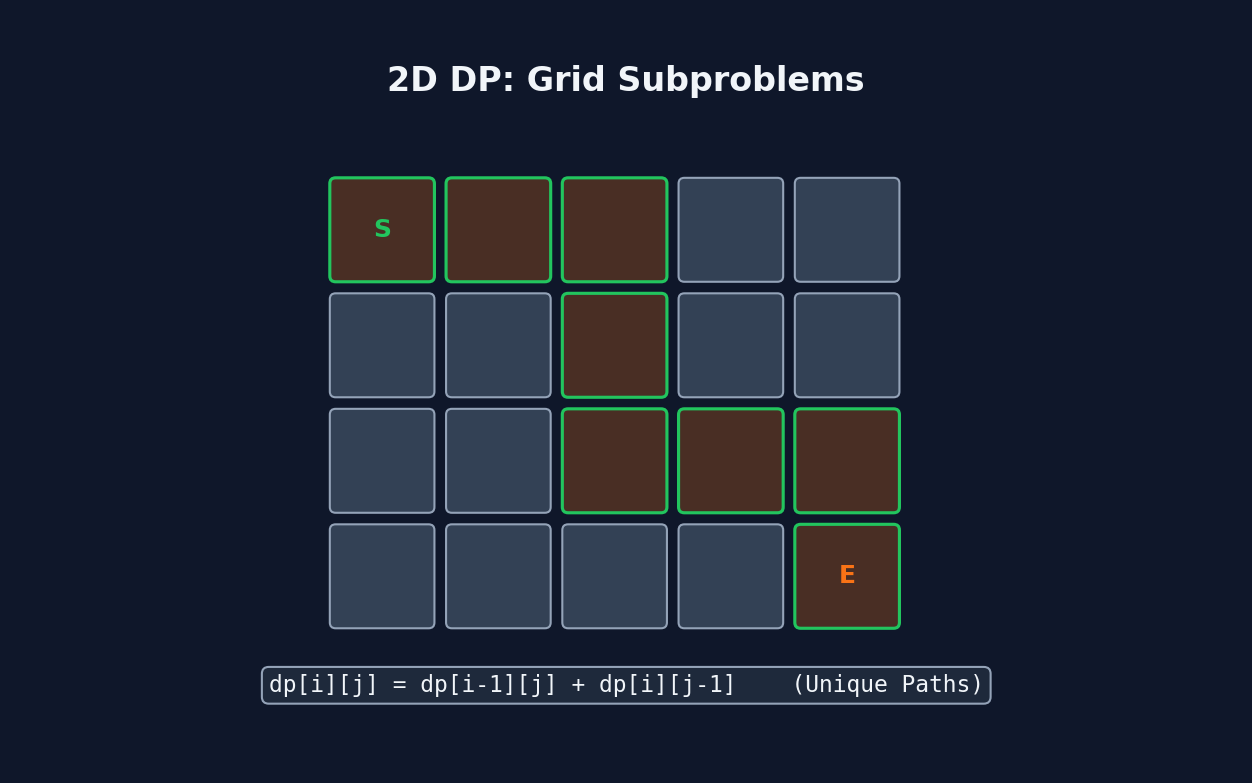
2D Dynamic Programming extends 1D DP to problems with two varying parameters, using a 2D table where dp[i][j] represents the solution for a subproblem defined by indices i and j. Common patterns include grid traversal (paths from top-left to bottom-right), string matching (edit distance, LCS), and knapsack problems (items vs capacity). Each cell depends on its neighbors (usually left, top, or diagonal), and you fill the table row by row.
When to Use 2-D DP
Pattern Recognition
Look for these trigger words in problem statements:
unique paths
2d-dp
longest common subsequence
best time to buy and sell stock with cooldown
coin change ii
target sum
interleaving string
edit distance
burst balloons
Common Mistakes
- Wrong table dimensions — often need (m+1) x (n+1) to handle empty string/array base cases
- Filling the table in the wrong order (dependencies must already be computed)
- Not initializing the first row and column correctly
- Using O(mn) space when O(n) suffices by only keeping the current and previous rows
When NOT to Use 2-D DP
- When the problem only has one varying parameter (1D DP is sufficient)
- When the grid/table is too large (consider memoization with pruning)
- When the problem requires tracking more state than two indices can capture
Practice Problems
Master 2-D DP
Build pattern recognition with interactive MCQs. Understand why to use 2-D DP, not just how.
Download LeetEye Free